

Texas Hold’em is Texas Hold’em, right?
Yes, and no.
The rules of the game are the same, but there are differences in how the two formats are played out. Let’s take a bird’s eye view of the similarities, differences, and nuances of each format.
Real Money Chips vs Tournament Chips
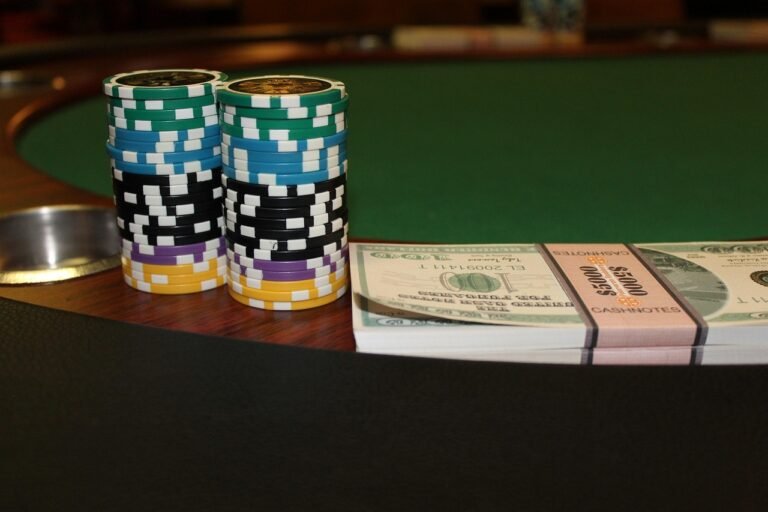
In a cash game, chips represent actual money; if you buy in for $100, you receive $100 worth of chips. When you leave the game, the total value of the chips you leave with, are exchanged for the equivalent amount of dollars. There is a one-to-one relationship between a chip’s nominal value, and the amount of money it represents.
Tournament chips do not represent actual money. A starting stack of 2,000 chips does not mean you have $2,000 dollars at the table. For example, if you pay a $200 entry fee and receive 2,000 chips, each chip has a nominal value of 10 cents ($200 / 2,000). Note that the cash out value of each chip is actually less than 10 cents, since if you win the tournament, you have all the chips, but you don’t get all the prize money!
Buying In and Cashing Out
A cash game buy‑in involves handing over some cash, getting the equivalent value of chips in return, and sitting down to play. Cashing out, is the reverse. Buy‑in and cash out can be done at any time. If you get stacked (lose all your chips), you can immediately buy more chips. Note that at some tables, there may be minimum and maximum buy‑in amounts.
With respect to cashing out, ‘hit and runs’ and ‘squirrelling’ are frowned upon. A hit and run is where you win a large pot in the first few hands and then cash out before the table has a chance to win a portion of that money back. Squirrelling is similar, except you remove your profit from your stack and sit back down at the table with your initial stack. This is not permitted in a casino and most online sites make you sit down with the amount you left with, if you sit back at the same table, within a certain time frame.
A tournament buy‑in usually has two components; the rake, which goes to the casino, and the entry, which goes into the prize pool. For example, a tournament may have a $55 buy‑in, with the rake being $5, and the remaining $50 going into the prize pool.
With tournaments you must keep playing until you are eliminated (you lose all your chips), or you win (you have all the chips!). Technically you can ‘sit out’ at any time; that is leave the table for a period of time, but your chips will remain on the table, and in play (paying blinds when they reach your seat). If you lose your chips, you are out.
Blind Levels
This is probably the most obvious difference between cash games, and touranaments.
A cash game has blinds that do not change, while tournament blinds increase over time. Tournament blind increases effectively force small stacks to take action.
What About Strategy?
A cash game has less pressure over time because you don’t need to constantly build a bigger stack to combat the rising blinds. Making good decisions over many hands is what matters. The risks tend to be more manageable as you choose your buy‑in and either leave after a good session, or before your losses are too great.
Another way of saying this is the variance (swings) in your bankroll are likely to be less.
Tournament strategy is quite different. As already mentioned, the blinds keep increasing. This forces the action, but sometimes when the tournament is close to the money, preserving a small stack might be more important than taking that ‘statistical edge’.
Tournament payouts are ‘top heavy’, with maybe the top 20% getting prize money, and the bulk of the prize pool going to first and second places.
It is common to play many tournaments without cashing, and then maybe have a big win, hence the bankroll swings can be wild.
Of course both forms of the game benefit from some universal strategies e.g. playing good cards in position.
And there we have it, a bird’s eye view of Texas Hold’em cash games versus tournaments.
Let us know in the comments which format you prefer to play, and why.
May your outs be many and your bad beats few!